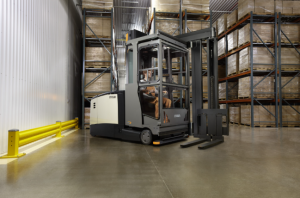
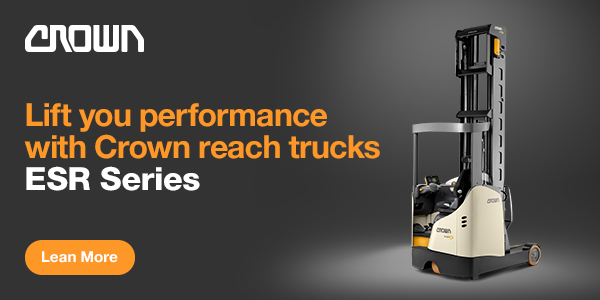
The cold chain sector continues to grow, and facility operators face the challenge of keeping up with customer demand and managing the high energy costs of refrigeration. Consequently, facility operators are seeking ways to improve productivity and maintain or increase throughput, including analysing their fleets’ lead-acid or lithium-ion power sources.
Compared to lead-acid batteries, lithium-ion batteries offer many benefits in cold storage applications:
- Reduced maintenance and risk: Lithium-ion batteries don’t require watering or expose employees to hazardous gases or chemicals during battery servicing and charging.
- Faster, more convenient recharging: Unlike lead-acid batteries, lithium-ion batteries can be opportunity-charged without negatively impacting the battery, and they don’t need to be removed from the forklift during brief charging breaks.
- Reclaimed storage space: Lead-acid batteries require designated charging rooms that take up valuable warehouse space. Lithium-ion batteries can be charged directly on the lift truck.
- Longer lifespan and runtime: Lithium-ion batteries have a significantly longer lifespan and runtime, with up to three times the throughput of lead-acid batteries in daily operations.
Although lithium-ion batteries require a larger upfront investment, the advantages may be worth it. The following four tips can help you make your decision.
1. Know your power profile
Forklifts consume power differently depending on the application, operator and driving patterns. Conducting a power study can help you determine whether lithium-ion batteries are the right choice for your operation.
2. Choose an integrated lithium-ion forklift system
Seamlessly integrating lithium-ion technology into your forklifts helps optimise performance, safety and efficiency. Modern systems include onboard intelligence that communicates with the forklift, ensuring safety features remain active as the battery’s charge depletes.
3. Strategically place your charging stations
Chargers that can operate in cold storage environments can eliminate the need for forklifts to leave the cold zone for charging, reducing downtime and condensation risk. Charging stations should allow easy access and proper cable management.
4. Provide operator training
Operator training should focus on how lithium-ion differs from lead-acid and on the charging behaviours that can help maximise battery life and runtime.
Crown’ V-Force lithium-ion batteries can help address many of the performance issues that lead-acid batteries encounter in cold storage. However, it’s essential to evaluate whether this technology aligns with your operation’s needs to ensure you gain the most from your investment.
Why choose lithium-ion for cold storage?
Less maintenance and fewer safety risks
Faster charging keeps forklifts working longer
Up to 3× the throughput of lead-acid batteries
Unlock your potential with UKWA membership
Don’t miss out on the chance to supercharge your business journey. Embrace the power of UKWA membership today and unlock a world of possibilities!